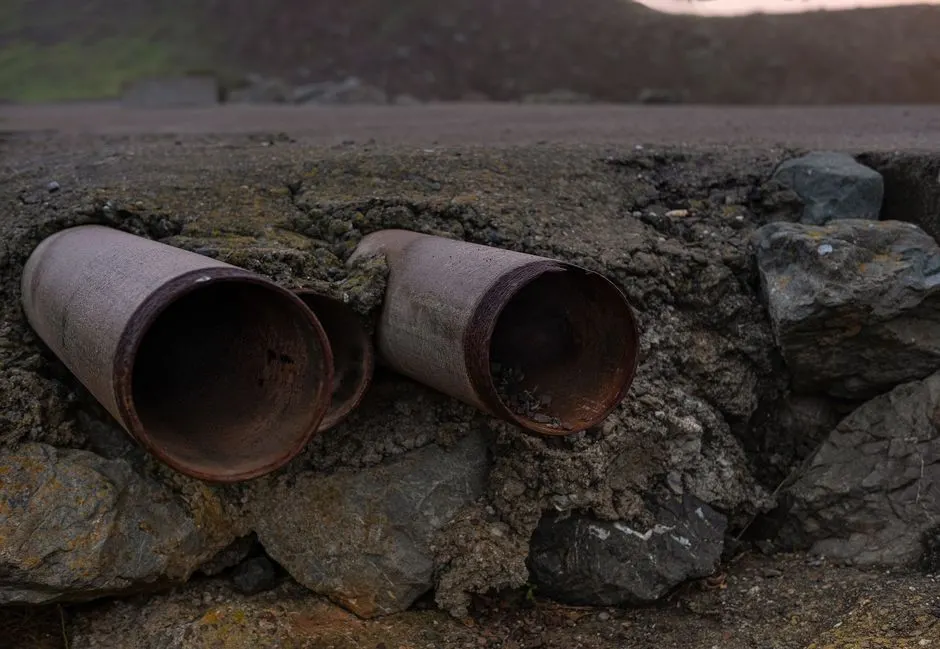
Salt air coastal conditions plumbing pipes Fort Pierce FL face is the single biggest reason metal pipes in this area corrode two to three times faster than pipes 20 miles inland. Airborne chloride from the Atlantic settles on exposed metal, combines with year-round humidity above 70%, and eats through copper, galvanized steel, and even brass fittings years ahead of schedule. If your home sits anywhere east of US-1 - especially near Hutchinson Island - your plumbing is working against a chemistry problem, not just age.
Below we break down exactly how that corrosion happens, what it looks like before a pipe fails, and what you can do to slow it down. We've repaired enough under-slab lines in Fort Pierce to know which neighborhoods see it first and which pipes give out when.
Why Salt Air Corrodes Metal Pipes Faster in Fort Pierce
Salt air pipe corrosion Fort Pierce FL is a chloride-driven electrochemical reaction, and it starts the day your pipes are installed. Ocean spray carries sodium chloride particles inland on prevailing easterly winds. Those particles land on exposed copper supply lines, water heater fittings, hose bibs, and any metal inside an attic or garage that isn't sealed. Once chloride bonds to the metal surface, it breaks down the natural oxide layer that normally protects copper from oxidation.
The result is pitting - small, deep cavities that tunnel through the pipe wall instead of spreading evenly. A pitted copper line can look fine from the outside and still be one pressure spike away from a pinhole leak. We see this constantly in homes built between 1975 and 2000 along the Indian River lagoon, where original copper supply lines are now 25 to 50 years old and showing chloride pitting on the hot side first.
Three factors make Fort Pierce worse than most Florida coastal cities:
- Wind direction. The prevailing easterly flow pushes salt aerosol from the beach straight into neighborhoods like Slab Leak Repair Fort Pierce FL in North Hutchinson Island and South Hutchinson Island.
- Humidity. Fort Pierce averages 70-80% relative humidity most of the year. Chloride needs moisture to stay reactive, and we hand it that moisture 12 months a year.
- Temperature swings. Hot days and cooler nights cause metal to expand and contract. Every cycle opens micro-cracks where chloride can penetrate deeper.
Coastal conditions plumbing Fort Pierce Florida homeowners deal with are not a one-time event. It's a slow, continuous exposure that never really stops.
How Coastal Humidity and Soil Chemistry Speed Up Pipe Damage
Metal pipe corrosion Fort Pierce FL isn't just about what's in the air - it's also about what's in the ground. Fort Pierce sits on a mix of sandy soil, shell hash, and fill dirt, and that soil stays damp almost year-round thanks to a water table that can sit as shallow as 3 to 5 feet in low-lying areas near the lagoon.
When copper or galvanized pipe is buried in constantly moist, slightly acidic soil, the outside of the pipe corrodes at the same time the inside is being attacked by chloride. That's a two-front war. We've pulled under-slab copper lines in Slab Leak Repair Fort Pierce FL in Downtown Fort Pierce that were paper-thin on the bottom where they touched wet soil, while the top of the same pipe still looked new.
Soil resistivity matters too. Sandy coastal soil holds less resistance to electrical current than dense clay, which means galvanic corrosion between dissimilar metals - copper to brass, copper to galvanized - moves faster here. If your home has any mixed-metal connections under the slab, those joints are the first place we look when a leak shows up.
What Are the Signs of Pipe Corrosion from Salt Air in Fort Pierce FL?
The signs of pipe corrosion from salt air in Fort Pierce FL show up long before a pipe actually bursts - you just have to know what you're looking at. Most homeowners miss the early warnings because they look like small, unrelated annoyances.
Watch for these:
- Green or blue-green staining on copper fixtures, around shut-off valves, or on the outside of exposed pipe. That's copper carbonate - the visible byproduct of active corrosion.
- Pinhole leaks that appear as tiny drips or damp spots on walls, ceilings, or baseboards. In coastal Fort Pierce, pinhole leaks are the number one early symptom of chloride pitting.
- Discolored water - brown, yellow, or blue-tinted - when you first turn on a tap. Rust from galvanized pipe or copper salts from a corroding line.
- Metallic or bitter taste in drinking water that wasn't there a year ago.
- Unexplained spikes in your water bill of $20-$60 a month, which usually means a slab leak is already running under your foundation.
- Warm spots on the floor or the sound of running water when every fixture is off - classic signs of a hot water slab leak.
If you're seeing two or more of these, the corrosion is already advanced. A professional leak detection visit costs far less than the slab repair that follows a burst line.
Which Pipes Fail First Near Hutchinson Island
Hutchinson Island salt air pipes Fort Pierce FL exposure hits hardest on the barrier island itself, but the corrosion gradient extends inland for miles. Homes within a half-mile of the ocean see the fastest failure rates; homes between US-1 and the lagoon are next; inland Fort Pierce neighborhoods corrode more slowly but still faster than the state average.
By material, here's what we see fail first in coastal Fort Pierce:
- Galvanized steel (pre-1970 homes): 15-25 year lifespan here versus 40-50 years inland. These pipes rust from the inside out and are the most common source of brown water complaints.
- Copper (1970-2000 homes): 25-40 years coastal versus 50-70 years inland. Pitting on the hot water side is the typical failure mode.
- Brass fittings and valves: dezincification - where zinc leaches out of the brass - is common within 10-15 years on the coast.
- PEX: the most salt-air-resistant option, but UV exposure and poor fittings still cause failures. We handle PEX pipe slab leak repair Fort Pierce FL regularly in newer construction.
If your home was built before 1990 and sits east of US-1, assume your under-slab lines are on borrowed time. A pressure test and camera inspection will tell you exactly where you stand.
How Can I Prevent Salt Air Pipe Corrosion in Fort Pierce FL?
You can prevent salt air pipe corrosion in Fort Pierce FL by reducing chloride exposure, controlling moisture, and replacing vulnerable materials before they fail. You can't stop the ocean, but you can absolutely slow the damage.
What actually works:
- Rinse exposed exterior pipes and hose bibs with fresh water every 4-6 weeks. It sounds simple because it is - flushing chloride off the surface resets the corrosion clock.
- Insulate exposed copper in attics, garages, and crawl spaces. Closed-cell foam keeps humid, salt-laden air off the metal.
- Keep your water heater anode rod fresh. Replace it every 3-5 years on the coast instead of the usual 5-7. A $30 rod saves a $1,500 tank.
- Maintain water pressure between 40 and 60 PSI. High pressure accelerates pitting at weak points. A $25 pressure regulator is cheap insurance.
- Install a whole-home water softener or conditioner if your supply is hard. Softer water is less aggressive on metal.
- Get an annual plumbing inspection if your home is over 20 years old. Catching pitting at year 22 is far cheaper than catching it at year 30 with water under your slab.
When copper lines are already too far gone, copper pipe slab leak repair Fort Pierce FL can buy you years - but if multiple sections are failing, a full repipe is the smarter long-term call.
Common Mistakes Homeowners Make with Coastal Pipe Corrosion
The biggest mistake we see is treating a pinhole leak as a one-off. On the coast, one pinhole almost always means three more are forming within 18 months. Patching the visible leak and ignoring the pattern leads to repeat failures and eventually a slab leak that requires jackhammering.
Other mistakes worth avoiding:
- Ignoring small water bill increases. A $30 jump is not a rate hike - it's usually a running leak.
- Using epoxy patches on copper. They fail within months in coastal humidity and hide the corrosion spreading underneath.
- Replacing one section of pipe with a different metal. Mixing copper and galvanized creates a galvanic cell that corrodes both faster.
- Skipping the pressure test after a repair. If you don't verify the whole system, you're guessing.
- Assuming homeowner's insurance covers corrosion. Most Florida policies exclude gradual corrosion damage. Read your policy before you need it.
When to Call a Professional
Call a professional when you see two or more corrosion signs at once, when your water bill jumps without explanation, or when you hear water running with every fixture off. Those are the moments when a $300-$600 leak detection visit saves you a $4,000-$12,000 slab repair.
Our team at Leak Repair Pros handles slab leak detection, spot repair, and full repipes across Fort Pierce and the Treasure Coast. We find the leak, fix it, and pressure-test the line before we leave - no guesswork, no repeat visits. If your home is over 20 years old and within a mile of the Indian River lagoon, a proactive inspection is worth scheduling this winter before the dry season ends and the ground shifts again.
Frequently Asked Questions
How does salt air affect plumbing pipes in Fort Pierce FL?
Airborne chloride from the Atlantic bonds to exposed metal and breaks down the protective oxide layer on copper, brass, and galvanized steel. Combined with 70%+ year-round humidity, this causes pitting that can tunnel through a pipe wall in 25-40 years instead of the 50-70 years seen inland.
What are the signs of pipe corrosion from salt air in Fort Pierce FL?
Green or blue-green staining on copper, pinhole leaks, discolored water, metallic taste, and unexplained water bill spikes of $20-$60 per month. Warm floor spots or running-water sounds with fixtures off usually mean the corrosion has already caused a slab leak.
How can I prevent salt air pipe corrosion in Fort Pierce FL?
Rinse exterior pipes monthly, insulate exposed copper, replace your water heater anode rod every 3-5 years, keep pressure at 40-60 PSI, and schedule annual inspections once your home passes 20 years old. These steps can add 10-15 years to coastal pipe lifespan.
Does living near Hutchinson Island increase pipe corrosion in Fort Pierce FL?
Yes. Homes within a half-mile of the ocean see pipe failure 2-3 times faster than inland Fort Pierce homes. The barrier island and neighborhoods east of US-1 get the highest chloride load, and galvanized steel there often fails by year 20.
How much does slab leak repair cost in Fort Pierce in 2026?
Typical 2026 pricing runs $800-$2,500 for a spot repair, $3,500-$8,000 for pipe rerouting, and $6,000-$15,000 for a full repipe depending on home size and slab access. Detection alone is usually $300-$600 and is often credited toward the repair.
Get Help with Slab Leak Repair Fort Pierce FL in Fort Pierce
If salt air has been quietly eating your pipes for two decades, don't wait for the floor to feel warm. We serve every neighborhood from Slab Leak Repair Fort Pierce FL in Fort Pierce to the barrier island, and we can usually get a technician out the same day you call.
Call Leak Repair Pros at +1 772-362-4143 for slab leak detection, spot repair, or a full repipe estimate. We'll tell you straight what's failing and what it costs to fix - no pressure, no upsell.